Beginner lesson
Beginner Minesweeper Guide
New to Minesweeper? This guide teaches the game from the first move: what the numbers mean, when to flag, how to find safe squares, and how to avoid the mistakes that make beginners lose early.
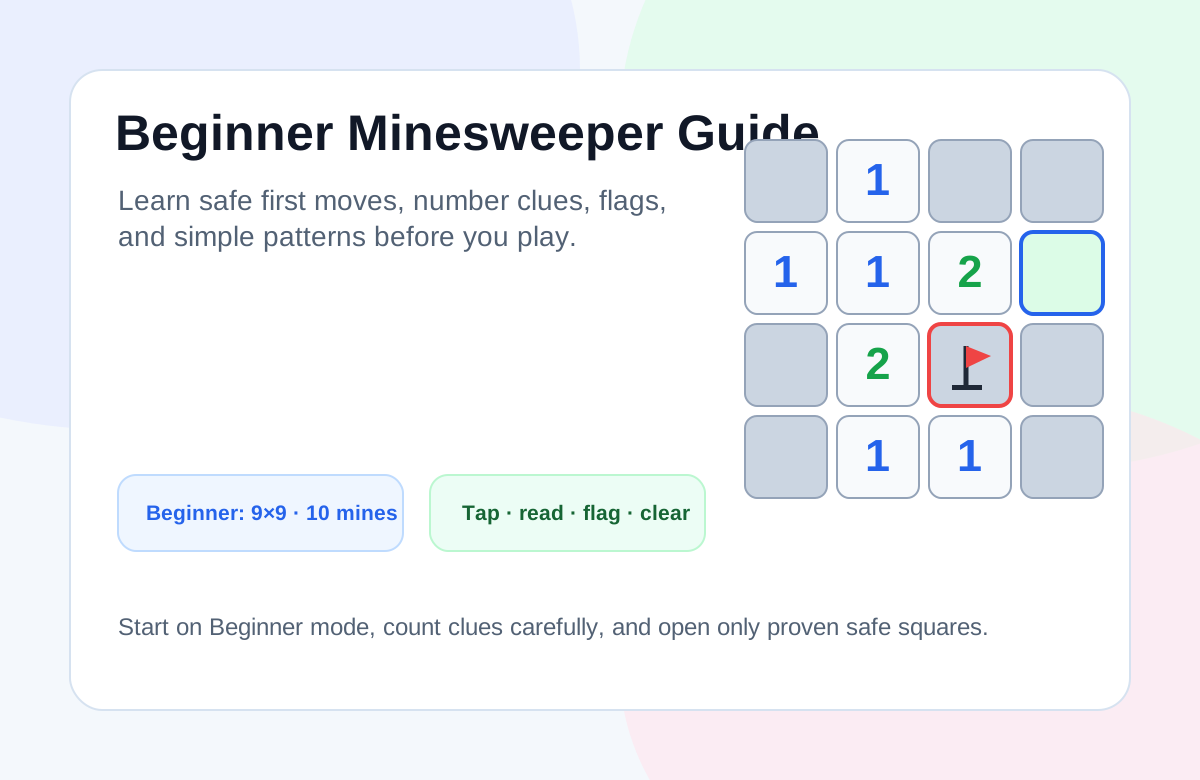
Quick answer: how should a beginner play Minesweeper?
A beginner should play slowly, start on the Beginner board, read the numbers before clicking again, and flag only mines that are proven by the clues. The most useful first habit is simple: after every click, ask what the nearby numbers are telling you. Minesweeper is not a speed game at first; it is a reading game.
The Beginner level is useful because the board is small enough to understand, but still teaches the same logic used on larger boards. Once you know how a 1, 2, and 3 behave around hidden squares, Intermediate and Expert feel much less random.
The Beginner Minesweeper board
The classic Beginner board is usually a 9 × 9 grid with 10 mines. That gives you enough space to learn without tracking too many hidden squares. Your goal is not to flag every mine as fast as possible. Your real goal is to reveal every safe square without opening a mine.
| Mode | Common board | Mines | Why it helps beginners |
|---|---|---|---|
| Beginner | 9 × 9 | 10 | Small board, fewer clues to track, good for learning. |
| Intermediate | 16 × 16 | 40 | More room, more patterns, better after the basics. |
| Expert | 30 × 16 | 99 | Large board, faster decisions, not ideal for a first lesson. |
Use Beginner mode until you can explain why you are making most moves. A few losses are normal. What matters is whether you understand the mistake that caused the loss.
What the numbers mean
Every number in Minesweeper counts mines touching that square. The count includes left, right, up, down, and all four diagonal positions. A 1 means exactly one mine is touching it. A 2 means exactly two mines are touching it. A blank area means no mines touch those opened squares, so the game expands that safe area automatically.
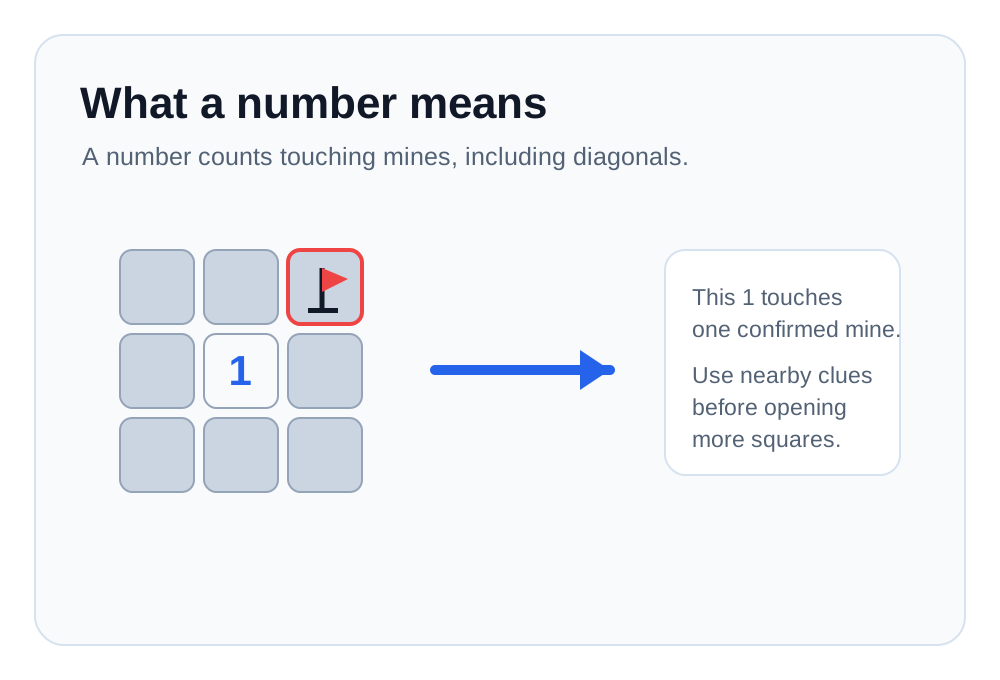
A 1 is the first clue to master
If a 1 touches only one hidden square, that hidden square must be a mine. Flag it, then look for safe squares around nearby numbers.
A 2 needs two mines
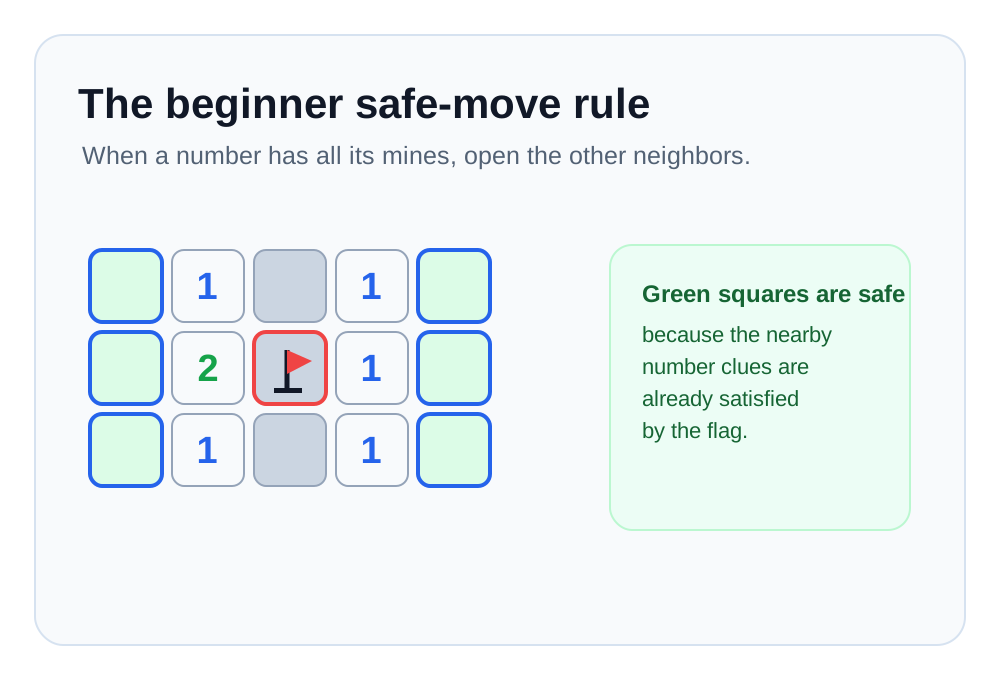
If a 2 already touches two flags, the other hidden squares around it are safe. This is one of the strongest beginner moves.
Your first game: a simple step-by-step method
- Choose Beginner. It gives you the smallest classic board and the easiest place to practice the rules.
- Open your first square. On this website, the first click is designed to be safe, so you can start reading clues instead of losing instantly.
- Look at the edge of the open area. The border between revealed squares and hidden squares is where most beginner decisions happen.
- Find numbers touching very few hidden squares. A 1 touching one hidden square, or a 2 touching two hidden squares, often gives you a clear flag.
- Flag confirmed mines. A flag is a note for a square that must be a mine, not a guess you hope is correct.
- Open safe neighbors. If a number has all its mines flagged, the remaining hidden squares around it are usually safe.
The safest beginner move
The safest move happens when a number is already satisfied. For example, if a 1 touches one flag, it has found its mine. Any other hidden square touching that same 1 cannot be another mine for that clue. If another number does not contradict the move, those squares are safe to open.
Beginner patterns worth learning
Patterns help you solve faster because they reduce repeated counting. You do not need to memorize a long list immediately. Start with simple edge patterns that appear around open areas. The two most useful beginner ideas are 1-1 and 1-2-1 because they teach how mines are forced by the shape of the border.
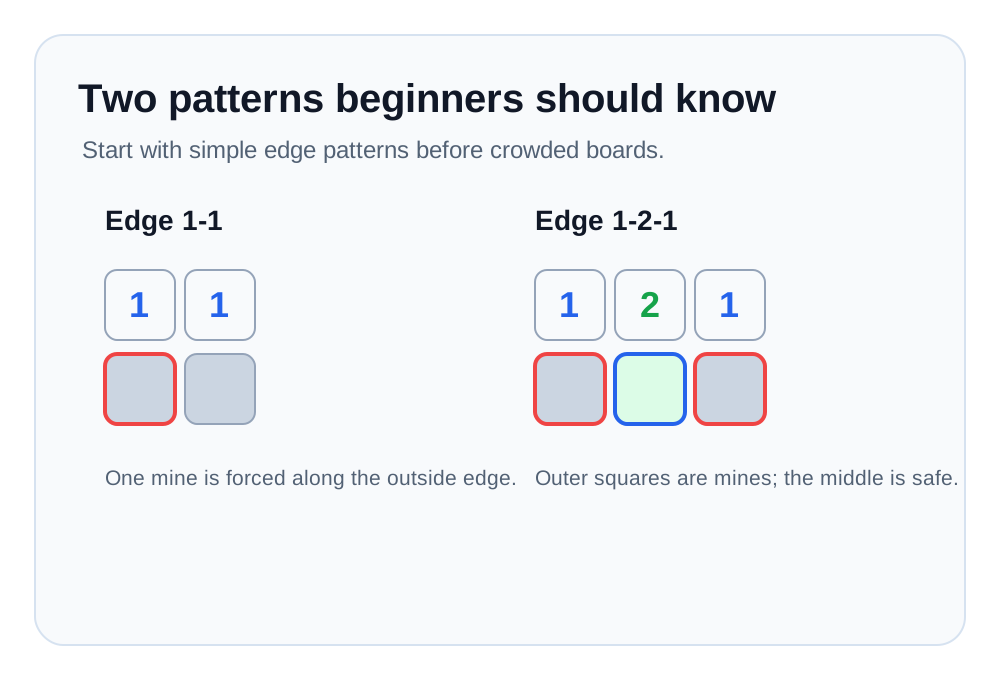
If patterns feel confusing, go back to the basic question: how many mines must touch each number? A pattern is just a shortcut for that counting process.
Common beginner mistakes
Clicking too quickly
Beginners often lose because they click the next closed square before reading the numbers. Pause after every new opening.
Flagging guesses
A guessed flag can make later clues misleading. Flag confirmed mines first; leave uncertain squares closed.
Ignoring diagonals
Diagonal squares count. Many early mistakes happen because a player counts only left, right, up, and down.
Moving away too early
If one part of the board has useful clues, finish reading it before jumping to a new area.
A 10-minute practice plan
Use this short plan when you want to improve without turning the game into a long study session.
Play Beginner slowly. Say what each 1 or 2 means before you click.
Look for safe-move situations: a number already touching the right number of flags.
Replay one lost position in your head and identify whether the mistake was counting, flagging, or guessing.
When should beginners move to Intermediate?
Move to Intermediate when you can win some Beginner boards without relying on random clicks. You do not need to win every board first. The better sign is confidence: you understand most of your flags, you can explain safe moves, and you know when you are truly guessing.
Related beginner-friendly pages
Beginner Minesweeper FAQ
What is the best Minesweeper level for beginners?
Beginner is the best level because the board is small and usually has 10 mines. It gives you enough clues to learn without overwhelming you.
Should I use flags as a beginner?
Yes, but use them carefully. Flag squares that are proven mines. Too many guessed flags can make the board harder to understand.
What does a 1 mean?
A 1 means exactly one mine touches that square, including diagonal neighbors.
Do diagonals count in Minesweeper?
Yes. Diagonal squares count as neighboring squares, so every number can refer to up to eight surrounding squares.
How do I know a square is safe?
A square is safe when nearby numbers have already accounted for their mines. For example, if a 1 touches one flag, its other hidden neighbors are safe unless another clue changes the situation.
Is Minesweeper mostly luck?
No. Minesweeper is mostly logic and pattern recognition, although some board positions can still require a guess.